Gunner HEAT PC Update 20260814 Adds Luchs Scout Car to West German Fleet
The latest Early Access update introduces the Spähpanzer Luchs in A1 and A2 variants, emphasizing high-speed reconnaissance and thermal optics over heavy firepower.
Update Overview
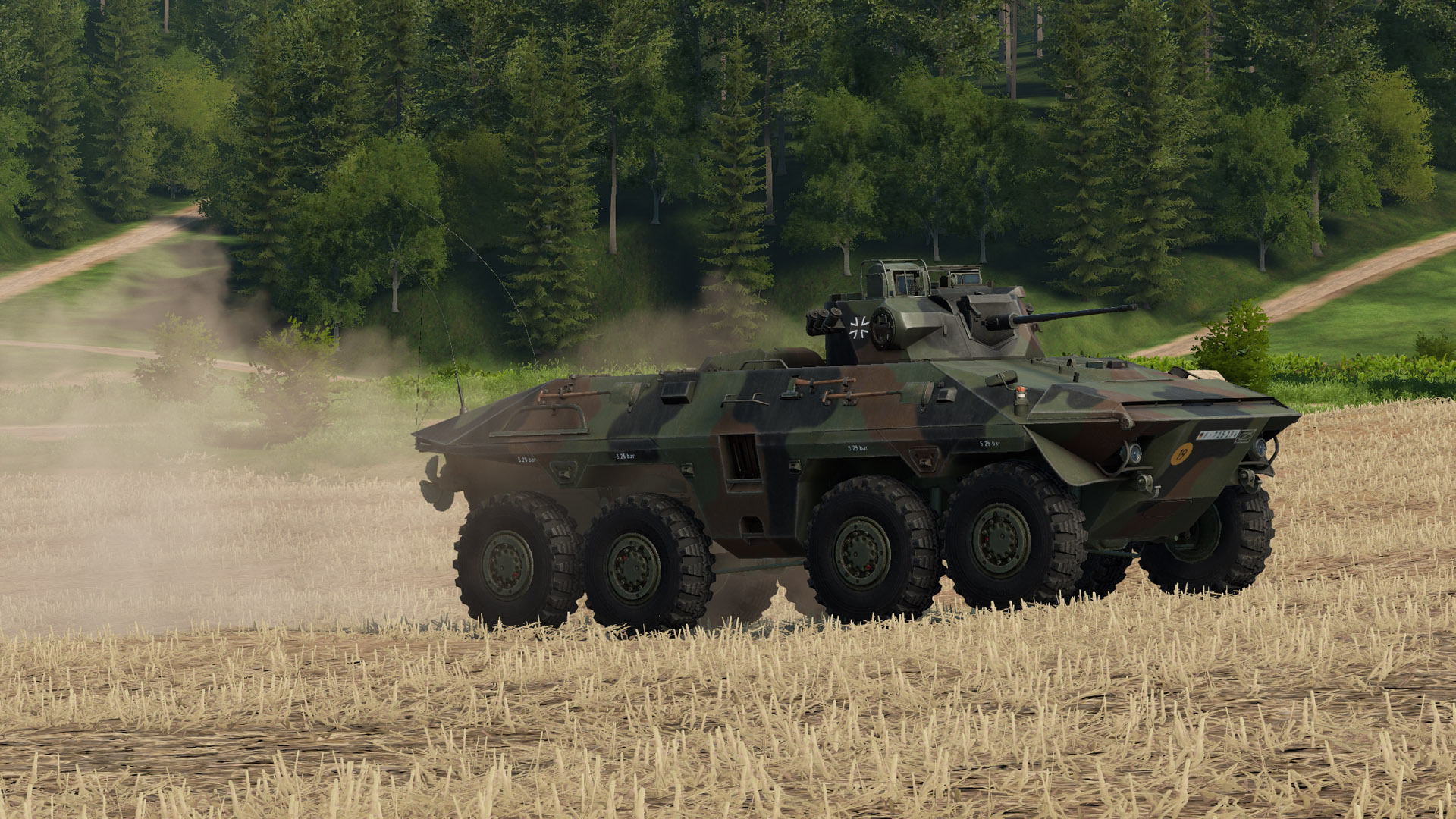
Gunner HEAT PC Early Access has been updated to version 20260814. This release expands the West German fleet with the introduction of the Spähpanzer Luchs, an armored scout car available in its A1 and A2 variants. The addition provides simulation users with a new vehicle class that prioritizes mobility and reconnaissance capabilities over the heavy engagement roles typically associated with Infantry Fighting Vehicles.
As noted by MicroProse Software, additional information regarding this and future updates is available via their Discord server and YouTube channel. Direct links to these resources are maintained on the official GHPC website.
Vehicle Capabilities and Limitations
The Luchs is defined by its combination of a quiet engine, amphibious 8-wheeled mobility, and the MK 20 cannon. This armament is the same weapon system used by the Marder IFV. The design philosophy of the vehicle is centered on avoiding extended confrontations. Instead, its primary role is to relay enemy locations to the rest of the force.
It is important to distinguish the Luchs from heavier combat vehicles. Unlike an Infantry Fighting Vehicle, the Luchs is essentially an armored car. It lacks the firepower to engage targets more sturdy than an armored personnel carrier. Consequently, trigger control is a critical factor when operating this vehicle. It does not carry extensive ammunition reserves comparable to the Marder, nor does it feature a coaxial machine gun. Once the autoloaded AP and HE belts are expended, the only remaining defensive option is to deploy smoke and disengage.
Performance Characteristics
To compensate for its limited firepower, the Luchs offers significant speed and agility. It achieves a road speed of 90 km/h, both forward and backward, and features all-wheel steering. However, this performance profile introduces specific handling challenges. Players are advised to monitor their speed carefully; undulating terrain presents a stability hazard once the vehicle picks up pace. For those seeking to manage speed more precisely, the numpad +/- keys can be used to set cruise control.
Variant Differences: Optics and AI Vision
The two available variants, A1 and A2, are primarily distinguished by their optics suites. These differences have practical implications for gameplay, particularly regarding target acquisition.
- Luchs A1: This variant is outfitted with a pairing of an IR searchlight and an intensifier night vision sight.
- Luchs A2: This variant features a "WBG" thermal optic. This upgrade places its spotting abilities on par with the newest NATO vehicles in GHPC's setting.
The distinction in optics is not merely cosmetic. Thanks to a recent overhaul to AI vision systems, the difference in equipment is reflected in the spotting speed of the AI crew for each variant. This effect is especially pronounced at night. While other differences between the A1 and A2 exist, they do not affect the actual experience of using the vehicle in gameplay.
Visual Customization and Historical Context
In keeping with the developers' tradition for portraying West Germany's fleet, the Luchs A2 variant has been assigned a tri-tone woodland camouflage paint scheme. This choice serves as a nod to the mid-1980s, a period when this paint scheme was coming into prominence. The Bundeswehr were early adopters of this camouflage, preceding the arrival of the chemical-resistant CARC paint formula that has become somewhat erroneously associated with the color scheme in retrospect.
This visual distinction also addresses a common point of curiosity regarding the game's faction aesthetics. The presence of this paint job on West German vehicles, while absent on American counterparts, is explained by this specific historical adoption timeline within the simulation's setting.
Practical Implications for Users
The introduction of the Luchs changes the tactical options available to West German players. The vehicle requires a different engagement doctrine than the Marder. Success relies on leveraging the 90 km/h speed and all-wheel steering to position for reconnaissance rather than direct combat. The lack of a coaxial machine gun and limited ammo reserves means that once the MK 20 cannon is dry, the vehicle is vulnerable. The thermal optics on the A2 variant provide a distinct advantage in low-visibility conditions, amplified by the updated AI vision systems, allowing for earlier target detection compared to the A1's night vision setup.
Players should approach the Luchs with caution on rough terrain, as the high speed can lead to stability issues. The update reinforces the simulation's focus on realistic vehicle limitations, where speed and optics must be balanced against armor and firepower constraints.
Real Sim is produced with editorial automation and institutional bylines. How this is made →
More Other Machines →