Assetto Corsa EVO GT Slick Tyre Model Overhaul
Kunos addresses long-standing simulation issues in GT slick tires, changing how rear-limited-slip differentials interact with yaw moments for GT2, GT3, GT4, and Cup cars.
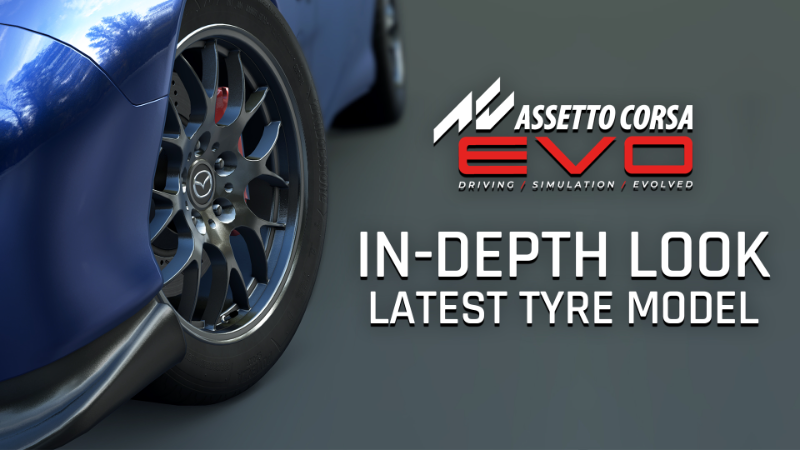
Kunos Simulazioni has released a detailed explanation of changes to the tyre model in Assetto Corsa EVO. The update focuses specifically on GT slick compounds, aiming to resolve fundamental inaccuracies that have persisted since the original Assetto Corsa. For simulation users, this represents a shift in how the game handles the interaction between rear limited-slip differentials and tire friction, directly affecting the feel of GT2, GT3, GT4, and Cup cars.
Addressing Historical Limitations
The development team acknowledged that previous attempts to fix these issues were incomplete. In Early Access 0.4, engineers tweaked around the root problems rather than solving them, resulting in a behavior that was generally better but still incorrect. The previous model traded inherent understeer for sensitive throttle pickup and a “floaty” behavior. This approach required significant slip to generate grip, a characteristic that did not accurately reflect real-world tire physics. Kunos noted that these perceivable problems trace back to Assetto Corsa Competizione and potentially the original Assetto Corsa.
The Yaw Moment Problem
The core of the new tyre model addresses a specific edge case: racing a car on and around the limit. While this is a niche scenario in general tire research, it is the primary focus for simulation fidelity because it is where driver feedback and frustration occur. The key question for the new model is whether the tire communicates intuitively and reliably to the driver.
A critical component of this update involves the interaction between rear limited-slip differentials (LSD) and tire forces. On race cars, the LSD ties the rear wheels together on power to prevent energy loss through the inside, unloaded wheel. Instead, it drives torque through the outside wheel. This difference in torque between the inside and outside rear wheel creates a “yaw moment.” Kunos used a physical analogy to explain this: imagine a vertical stick through the center of the car. Pushing forward on the right rear corner while pulling on the left rear rotates the car around that central axis. The new model aims to simulate this rotational force accurately.
Scope of Changes
It is crucial to note the specific scope of these changes. The updated tyre model applies solely to GT slicks on cars ranging from the Mazda MX-5 Cup to the Ferrari F40 LM. This includes all GT2, GT3, GT4, and Cup cars. The changes do not apply to Formula 1 cars or road compounds. Users driving these specific classes will notice a different balance of grip and stability, particularly during power application and corner exit.
Practical Implications for Users
Because the underlying physics of how grip is generated and how yaw moments are applied have changed, existing setups may no longer be optimal. Kunos advised that users will likely want to start over with their setups. The team also indicated that they would update default setups if time permitted, though they asked users to bear with them during this process. This suggests that while the base game files will be updated, the tuning process for individual cars may be an ongoing effort.
The update reflects a broader commitment to simulation accuracy over arcade-style forgiveness. By addressing the root causes of the “floaty” behavior, Kunos aims to provide a more consistent and intuitive driving experience. The focus on yaw moments and LSD interaction means that drivers will need to adapt their inputs, particularly how they manage throttle application in corners. The goal is a tire model that behaves correctly under load, slip, camber, speed, temperature, pressure, and toe, providing a reliable foundation for competitive simulation racing.
This patch does not introduce new cars or tracks but refines the core simulation elements that define the driving experience. For users of the affected GT classes, this is a significant technical update that requires re-evaluation of driving techniques and setup parameters. The clarity provided by Kunos on the specific limitations and scope of the changes helps users understand exactly what has changed and what remains the same.
Real Sim is produced with editorial automation and institutional bylines. How this is made →
More Sim Racing →