BeamNG.drive 0.39 Turns Rally Mode Into a Full Utah Loop
The July release adds the NGRC Rally Utah 2026 loop, structured pace notes and a renderer overhaul, while its new VR controls arrive with an explicit stability warning.
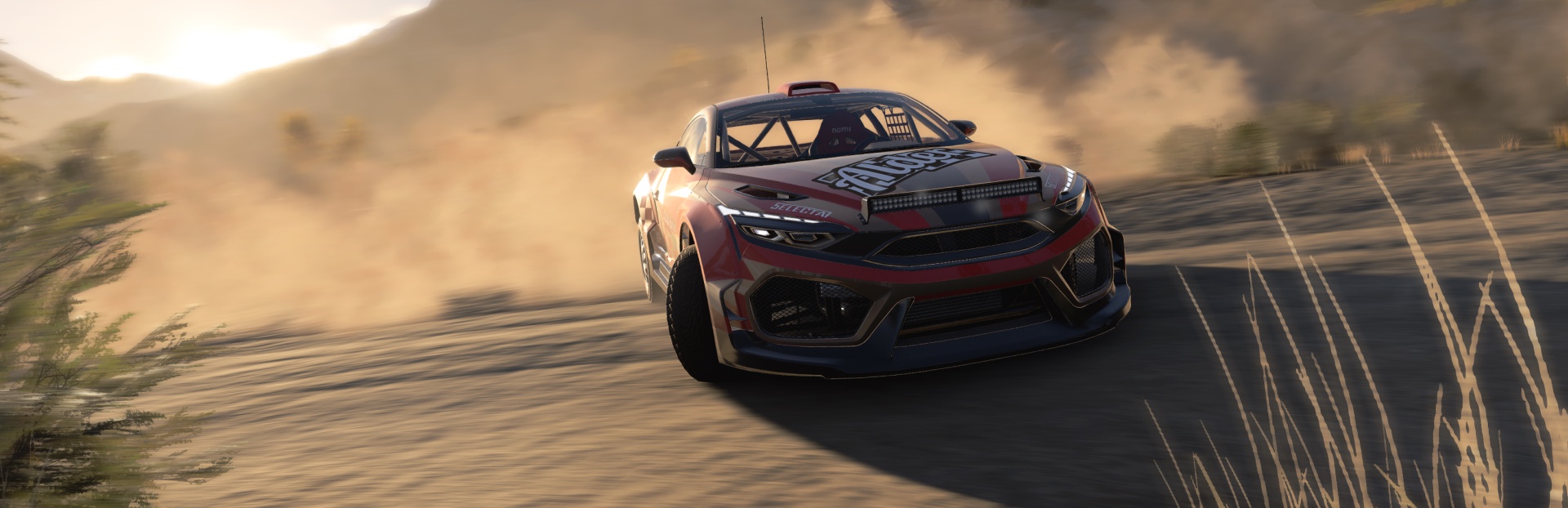
BeamNG.drive version 0.39 arrived on July 29, 2026, after a long wait for a major release. The update is broad rather than narrowly vehicle-focused: it changes the rendering pipeline, rebuilds large parts of the interface, expands Rally Mode and adds another layer to the simulator’s already unusual soft-body physics. BeamNG then published follow-up hotfixes, including version 0.39.2, as it worked through problems reported after launch.
The most immediately useful addition for rally drivers is NGRC Rally Utah 2026. BeamNG describes it as four gravel stages covering 16.4 kilometres, with river crossings, high-speed jumps and exposed canyon sections. The route is built as a loop rather than a collection of disconnected time trials, so the driving between stages is part of the event. That gives the mode a stronger sense of a rally weekend: a mistake on a liaison section can still shape the next timed run, and a damaged car is not simply reset by a menu transition.
The update also expands how the driver receives information. Structured pacenotes contain nearly 200 calls that can be combined and adjusted, with voice packs from Alex Kihurani and the developers credited by BeamNG. Co-driver selection is handled from the mission start screen, while liaison traffic places other vehicles on the route. Those details matter because rally simulation is partly a communication problem. A long list of scenery objects is not enough; the driver needs a repeatable way to translate a call into a decision before the road changes direction.
Rally Mode is not the only part of the driving model that has moved forward. BeamNG now lets moving vehicles influence the airflow around nearby vehicles. Slipstreaming and bump drafting are described in the notes as part of the new aerodynamic model, alongside changes to rally penalties and recovery behaviour. The Cherrier Ardente is the headline new car, with factory and custom configurations spanning road, circuit, trackday and rally use. That makes it more than a menu addition: the same vehicle can be set up for several of the new release’s driving contexts.
The visual overhaul is equally significant for a simulator that is often used as a testing environment as much as a racing game. Direct3D 12 is now the default renderer on Windows, HDR output is supported on Vulkan and Direct3D 12, and the release changes tone mapping, lighting and terrain presentation. The revised camera and screenshot tools also expose more control over capture settings, which should make it easier for modders and league organisers to document a run consistently.
VR receives practical changes, but the release notes are unusually candid about the trade-off. Version 0.39 adds controller binding support, stores those assignments independently for different headset brands and can switch to a Vulkan-compatible renderer when VR is launched from SteamVR or with the new command-line option. It also fixes a right-eye stutter issue on Quest headsets and several OpenXR persistence problems. BeamNG warns that the larger render-engine changes may make VR less stable in this version, so the new controls should be read as groundwork rather than a claim that every headset setup is now trouble-free.
That distinction is important. A major update can add a convincing rally loop while still leaving questions about performance, input behaviour and physics edge cases for later patches. For now, 0.39 gives BeamNG.drive a more coherent rally structure, a more ambitious rendering base and a larger set of tools for people who build their own events. It is a substantial expansion of what the simulator asks a driver to manage, not just another vehicle drop.
There is a useful design connection between those changes. Pacenotes make the route readable, the aerodynamic work makes traffic relevant and the damage model gives a long event consequences. The renderer and capture tools then make the result easier to share with a league or mod team. None of those systems has to be treated as a headline feature in isolation. Together, they make a user-created rally feel more like a repeatable event that can be prepared, driven and reviewed rather than a one-off run through a new map.
Real Sim is produced with editorial automation and institutional bylines. How this is made →
More Sim Racing →