Hot Wheels Infinite Rush Details Its Rush Squad and Campaign Progression
Milestone’s second Beyond the Track episode explains the four vehicle classes, rival teams and customisation systems that shape the upcoming open-world racing game.
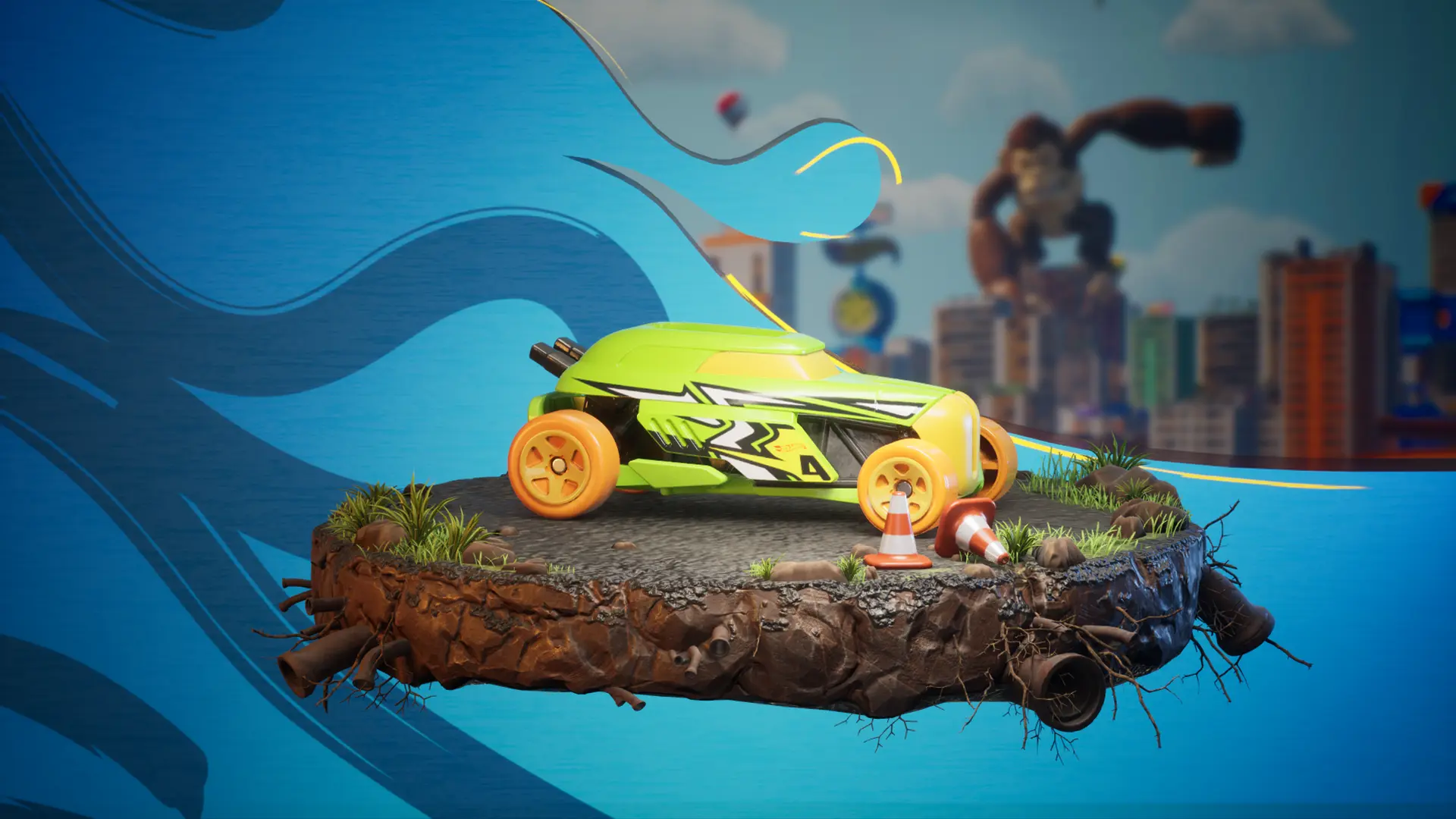
Milestone’s second episode of Beyond the Track gives Hot Wheels Infinite Rush a clearer structure than its bright toy-box presentation might suggest. The upcoming racer is built around a campaign, a changing squad of four cars and a set of handling rules that separate its vehicles into distinct jobs. It is still an arcade-style game rather than a conventional driving simulator, but the underlying design is more systematic than a sequence of disconnected stunt tracks.
Every Rush Squad contains one vehicle from each of four classes. Drifters are built around maintaining speed through corners and recharging boost while sliding. Speeders charge boost through outright velocity. Titans trade top speed for power and a faster recharge, but temporarily slow down if their boost charge is emptied. Versatiles sit between those extremes, offering a balanced option for players who do not want to build a squad around one specialised trait.
The point of the system is not simply to choose a favourite car before a race. Players can switch between the four vehicles while free roaming, using the quick-change control to respond to the challenge ahead. Milestone’s presentation suggests that a route will ask the player to read its surfaces, jumps and corners, then choose the class that fits the immediate problem. That gives the open-world sections a lightweight decision layer instead of making the garage a purely cosmetic menu.
The initial squad is only the beginning of the collection. Each island has a rival team made up of three Rushers and a Rush Master. Career events award points that unlock head-to-head challenges against those rivals. Defeating the full crew opens the final encounter with the Rush Master, and victories add the defeated Hot Wheels vehicle to the player’s collection. Progress therefore has two linked tracks: beating the island’s team and expanding the set of cars available for future events.
Milestone is also adding perks that can improve performance statistics and let players tune the feel of their chosen driving style. Boost and strafe effects can be customised, while the Creativity Corner covers stickers, wheels and rims. Those systems serve different audiences. Perks give the campaign a reason to revisit the garage, while visual customisation gives players a way to make a favourite vehicle recognisable in a crowded online or free-roam session.
Hot Wheels Infinite Rush is scheduled for September 10, 2026, on PlayStation 5, Xbox Series X|S, Nintendo Switch 2, ROG Xbox Ally, ROG Xbox Ally X and PC through Steam, the Microsoft Store and the Epic Games Store. Early Access is scheduled to begin on September 7. Milestone’s announcement describes a broad platform plan, but it does not establish how the game’s handling will feel with a force-feedback wheel or whether its class system will translate into the kind of repeatable setup work expected by serious sim racers.
That limitation is worth keeping in view. Infinite Rush is using simulation-adjacent ideas—vehicle roles, boost management, progression and route reading—to organise a toy-inspired racing world. Its significance for the wider racing audience is not that it replaces a physics-first simulator. It is that a new mainstream racer is making the relationship between vehicle choice, course design and campaign progress explicit enough for players to think about how they drive, not only what they collect.
The structure should also make the game easier to read for spectators and new players. A vehicle class tells the audience why a car is being chosen, while the squad system gives a race a visible strategic decision before the first corner. That is a different kind of accessibility from an assist toggle. It is about explaining the game’s vocabulary through the campaign, so players can understand the consequences of a choice before they start chasing faster times.
Milestone’s challenge will be keeping that vocabulary useful after the novelty wears off. If the islands repeatedly reward the same class, the four-way system becomes a checklist. If routes genuinely ask for different approaches, the squad becomes a reason to learn the environment and revisit events. The announcement establishes the tools and progression loop; the finished game will show whether the open world gives those tools enough variety.
Real Sim is produced with editorial automation and institutional bylines. How this is made →
More Sim Racing →