Project Motor Racing Rebuilds GT3 and GT4 Handling in Free Update 2.1
The July 29 release revises the core physics of two major classes, adds the free Aussie Rivals Pack and moves triple-screen support into an early PC alpha.
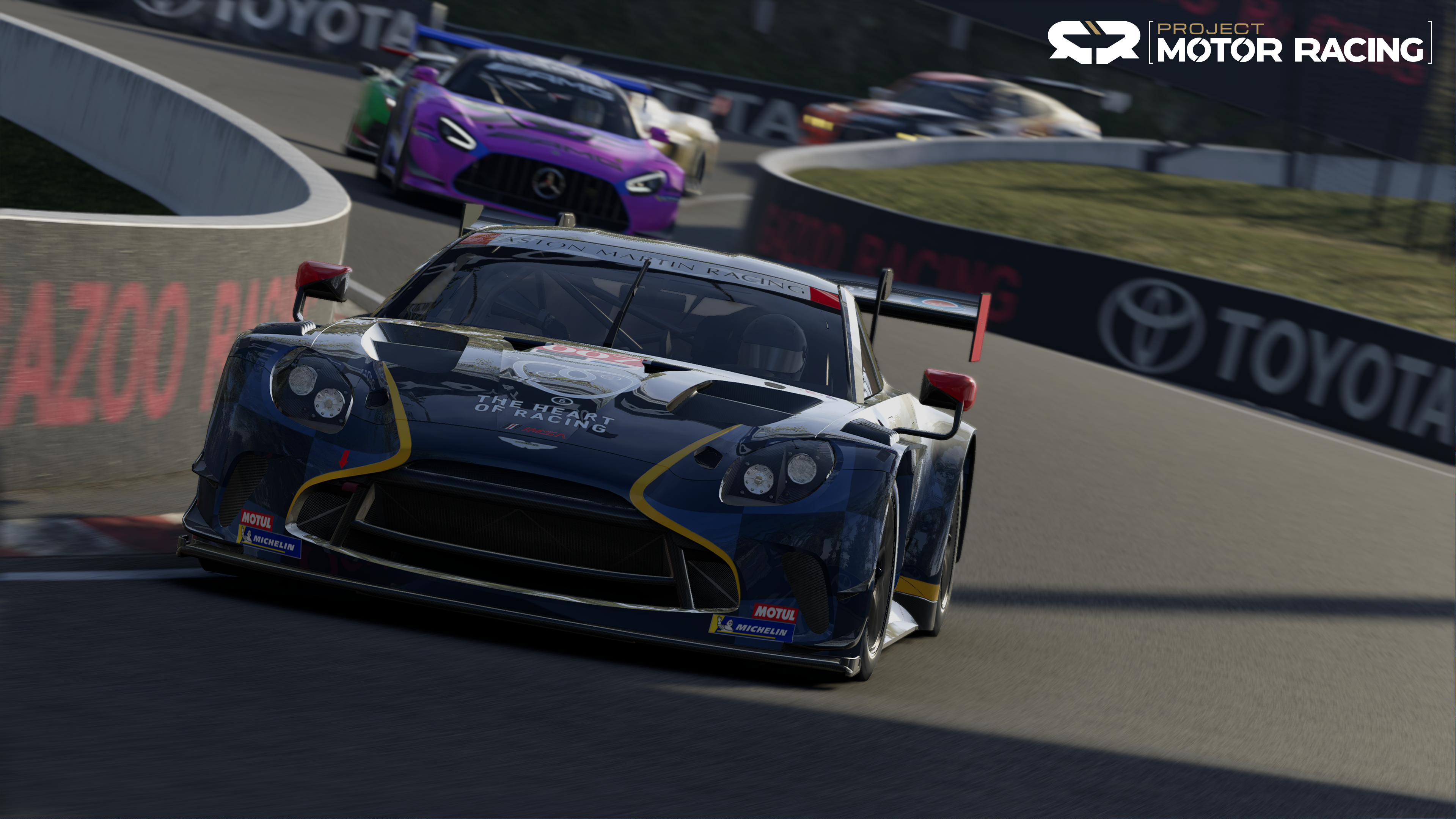
Project Motor Racing’s July 29 Update 2.1 is a physics release wearing the clothes of a content update. The headline addition is the free Aussie Rivals Pack, which brings the Holden Commodore VF into the AUS V8 class. The larger story is the comprehensive rebuild of the GT3 and GT4 classes around revised behaviour, setup limits and tyre and brake responses.
The developer says the overhaul uses real-world homologation data. That phrase matters, but it does not mean the simulator has become a direct substitute for a race engineer’s data room. It means the update is using a more disciplined reference point for the relationships the game is trying to model: suspension geometry, differentials, gear ratios, inertia, centre of gravity, turbo behaviour, aerodynamic sensitivity and tyre performance.
Why the setup warning matters
The update changes enough of those relationships that existing saved setups will no longer work as expected. New defaults are supplied, including low-drag setups for Daytona International Speedway and Brianza and a more stable Nürburgring Nordschleife setup. For players who have invested time in a GT3 or GT4 baseline, that is not a small quality-of-life note. It is a reminder that a physics overhaul can invalidate a setup workflow even when the car and circuit themselves have not changed.
The revised tyre model adds temperature and grip changes, severe wear during extreme overheating and scrubbing, and brake heat that affects tyre temperature. Adjustable brake ducts now influence cooling and aerodynamic drag. Those links give the update a more consequential engineering shape: an aggressive setup may buy a short-term advantage while moving heat into the next phase of a stint.
The naturally aspirated cars also receive intake ram-air simulation, while turbocharged cars get revised turbo modelling. These details are easy to lose in a long patch list, but they point to the same goal as the class-wide changes: make different powertrains and driving styles create different compromises.
The online and display layer catches up
Update 2.1 adds a phased Join-in-Progress feature for supported Practice and Qualifying sessions in Custom Lobbies. Ranked Racing notifications are intended to tell registered players when a race is about to begin, reducing the need to sit on a registration screen. Neither feature solves the larger social problem of filling a grid, but both reduce friction around the time a grid is forming.
VR receives more fixes and configuration options, while triple-screen support enters an early alpha state on PC. The qualifier is important. Alpha support is an invitation to test an unfinished path, not a finished compatibility claim. Players planning a serious display installation should treat it as an experiment and keep the existing single-screen or VR route available.
The same caution applies to the physics language. “More authentic” is a direction, not a measurable universal result. The useful evidence will be whether the revised inputs produce consistent setup trade-offs across cars, weather and session length, and whether the defaults give new drivers a sensible starting point after old setups are retired. Those are questions for continued updates and independent testing, not conclusions that can be extracted from a changelog alone.
For league organisers, the timing may be as important as the handling. A class-wide revision means that a pre-update baseline is no longer a neutral reference for practice or stewarding. Teams need to communicate which build and defaults they are using, while drivers need to budget time to recreate the setups that matter to them. The free Holden content adds variety, but the reset in the GT3 and GT4 classes is the operational story.
The combination is a substantial reset: GT3 and GT4 drivers should expect to revisit their setups, while everyone else gets a new car, improved session flow and experimental display support. That is useful context for reading the release as a model revision rather than a simple free-DLC announcement.
Real Sim is produced with editorial automation and institutional bylines. How this is made →
More Sim Racing →