Space Engineers: Warfare 3 Weapon Mechanics Explained
Keen Software House clarifies how torpedo launchers, ammo switching, and targeting systems function in the upcoming Space Engineers: Warfare 3 update.
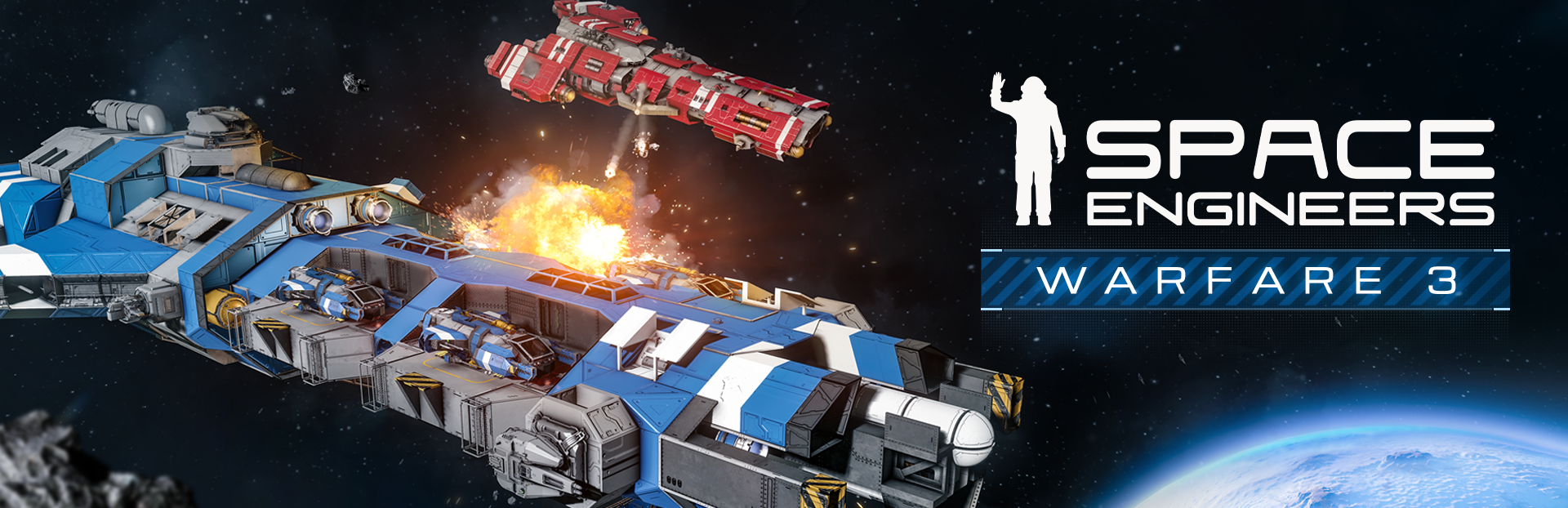
Following the initial reveal of Space Engineers: Warfare 3, players have asked how the new combat systems will function in practice. Keen Software House addressed these questions in a recent announcement, detailing the mechanics behind missiles, torpedoes, ammunition management, and targeting subsystems. The studio spoke with Lead Designer Ryan Keel to explain the differences between weapon types and how they integrate into ship design.
Torpedo Launchers and Grid Integration
Torpedoes are distinct from missiles in their physical implementation. Unlike smaller missile systems, torpedoes require dedicated launcher blocks. These launchers are available for both large and small grids, though their size and logistical requirements differ significantly.
Because torpedo launchers are bulky, they occupy a substantial amount of space on a ship. Fitting them into a design requires careful planning around the rest of the grid’s layout and infrastructure. This bulkiness affects how players approach ship construction, as these weapons cannot be added as an afterthought without considering the structural and spatial constraints of the vessel.
Logistical handling also varies by grid size. Small-grid launchers do not have conveyor access and must be loaded manually. In contrast, large-grid variants can be connected to the conveyor system, allowing for automated reloading and more efficient ammunition management. This distinction is critical for players designing large capital ships, where manual loading of bulky weapons would be impractical during extended engagements.
Targeting and Placement Flexibility
A key mechanical difference between torpedoes and other weapon types is their targeting behavior. Torpedoes can seek out locked targets after launch. This means the launcher itself does not always need to be pointed directly at the enemy when firing.
This capability makes placement more flexible than other weapon types. Players have more options when working torpedoes into larger ship designs, as the launchers do not need to be positioned on a direct line of fire to the target. This flexibility allows for more creative ship layouts, where launchers can be placed in protected or less exposed areas of the grid, relying on the projectile’s guidance system to find the target.
Ammunition Switching Mechanics
Weapons that support multiple ammunition types now allow players to choose exactly what is loaded. This system provides three methods for selecting ammunition:
- Selecting a specific ammo type from the weapon’s control panel.
- Cycling through available options from the toolbar.
- Leaving the setting on “Any” to let the weapon pull from whatever compatible ammunition is available.
However, changing the selected ammo type does not immediately replace ammunition that is already loaded in the weapon. The weapon will continue using its current ammunition until it is fired or reloaded. To switch types, players must use new actions to forcibly unload the current ammunition and begin loading the newly selected type.
This mechanic is particularly useful for weapons like torpedo launchers, where different ammunition types may be better suited to different targets. It allows players to adapt their loadout on the fly without waiting for the weapon to empty naturally, providing a tactical advantage in dynamic combat scenarios.
Targeting Subsystems
The announcement also addressed questions regarding self-guided missiles and torpedoes, as well as the possibility of targeting specific ship subsystems. While the full details of subsystem targeting were not elaborated upon in this specific segment, the focus on self-guided projectiles highlights the shift toward more complex, guided weapon systems in Warfare 3.
The integration of these systems aims to provide players with more depth in combat strategy. By allowing for precise ammunition selection and flexible launcher placement, the update encourages players to design ships that are not just powerful, but also adaptable to different combat situations.
Implications for Simulation Users
For simulation users, these changes emphasize the importance of logistical planning and tactical flexibility. The distinction between small and large grid launcher capabilities means that ship design must account for the specific needs of the weapon systems being installed. The ability to switch ammunition types on the fly adds a layer of resource management that requires players to consider what types of ammunition they are carrying and how quickly they can adapt to changing threats.
The flexibility in launcher placement due to self-guided projectiles also changes how players think about ship layout. Instead of prioritizing direct line-of-sight for all weapons, players can now consider placing guided weapon launchers in more protected areas, potentially improving the overall survivability of the ship while maintaining offensive capability.
These mechanics are part of the broader Warfare 3 update, which includes other features such as the Artillery Turret and Jump Seat. The detailed explanation of these weapon systems provides a clearer picture of how combat will function in the upcoming update, allowing players to prepare their designs and strategies accordingly.
Real Sim is produced with editorial automation and institutional bylines. How this is made →
More Other Machines →