DCS: MiG-17F Enters Final Tuning Phase with Complete Systems and Engine Overhaul
Red Star Simulations reports that the MiG-17F module is shifting from feature development to final testing, with fully implemented avionics, a detailed VK-1F engine simulation, and real-world audio validation. A new P-47D campaign is also announced.
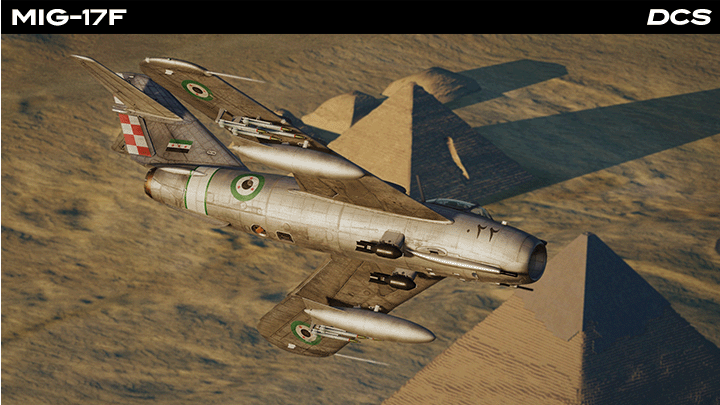
The development of the DCS: MiG-17F module has entered its final stage, marking a shift in focus from implementing new features to final tuning and testing. According to a development report by Red Star Simulations, the aircraft is nearing completion with major progress across systems, navigation, avionics, and a comprehensive overhaul of the VK-1F engine simulation. This update clarifies the current state of the “Fresco” variant for simulation users, indicating that the module is approaching Eagle Dynamics internal testing. Alongside the fighter update, Reflected Campaigns has announced the DCS: P-47D Eagles Rising Campaign, which places players in the cockpit of the 4th Fighter Group escorting Eighth Air Force bombers over occupied Europe.
Systems and Avionics Completion
The most significant technical change for users is the completion of the aircraft’s core systems. Hydraulic and pneumatic systems are now fully implemented, covering both normal and emergency operations. The oxygen and cockpit pressurization systems are also finished. Navigation and cockpit lighting have been implemented, and the majority of cockpit instrumentation, including the chronograph and secondary engine instruments, are complete. Pilots will also have access to a custom-designed kneeboard featuring authentic Soviet styling and mission-specific reference pages. Ground handling has been revamped with new suspension modeling.
Avionics capabilities have expanded to support historical instrument flight procedures. The P-800 VHF radio is now fully functional. Crucially, the ARK-5 Automatic Radio Compass has been implemented across its Compass, Antenna, and Loop operating modes. This implementation allows pilots to execute authentic Soviet radio navigation procedures, specifically enabling complete historical NDB instrument approaches in Instrument Meteorological Conditions (IMC) using only the aircraft’s onboard equipment. The SRD-1M gun radar has also been implemented and is currently undergoing final tuning.
Engine Simulation and Audio Overhaul
The VK-1F engine simulation has undergone a detailed overhaul. The update introduces realistic modeling of compressor surges, flameouts, hot starts, engine damage, and restart procedures, complete with associated visual effects. These changes are supported by refined fuel, hydraulic, and engine system mechanisms. This builds upon previous work detailed in March regarding the engine’s history and afterburner feel.
To match the visual and mechanical updates, the engine sound environment has been completely overhauled. Professional recording sessions were conducted on a real MiG-17F. Multiple microphones were positioned both inside and outside the aircraft to capture the VK-1F across a wide range of RPM, power settings, and operating conditions. Additionally, most cockpit switches, levers, and controls have been replaced with newly recorded custom sounds to enhance auditory fidelity.
Flight Model and Validation
The flight and physics models are now feature complete but continue to receive refinement. Improvements have been made to aerodynamic modeling, pilot control forces, adverse yaw, suspension, taxi behavior, and overall aircraft handling. Revised stall characteristics and newly implemented spin behavior are currently undergoing testing. These updates aim to introduce more natural and less predictable departure characteristics, moving away from standardized or overly stable flight envelopes.
The development team is conducting real-world validation testing against an actual MiG-17F. This process is intended to bring the simulation closer to the performance and handling of the real aircraft as it approaches internal testing by Eagle Dynamics. The steady pace of development since the previous update suggests that the module is maturing rapidly, with the focus now on polishing existing features rather than adding new ones.
Practical Implications for Users
For simulation users, these updates mean that the MiG-17F will offer a higher degree of systemic fidelity upon release. The ability to fly NDB approaches in IMC using the ARK-5 and P-800 radio represents a significant step in historical accuracy for Soviet-era instrument flight. The complete hydraulic and pneumatic systems, including emergency operations, require pilots to manage the aircraft’s state more actively, particularly in failure scenarios. The overhauled engine simulation demands precise management of start-up and shut-down procedures to avoid damage or flameouts.
The new audio environment, recorded from a real airframe, promises a more immersive experience, with distinct sounds for different engine states and cockpit interactions. The refined flight model, particularly the revised stall and spin behavior, suggests that pilots will need to adapt their handling techniques to account for less predictable departure characteristics. As the module enters its final tuning phase, users can expect a stable and feature-complete aircraft that prioritizes historical authenticity and systemic depth.
The announcement of the DCS: P-47D Eagles Rising Campaign provides additional context for the broader DCS ecosystem, offering a structured historical experience for users interested in World War II air combat. This campaign complements the ongoing development of high-fidelity aircraft modules by providing narrative and mission-based content.
Real Sim is produced with editorial automation and institutional bylines. How this is made →
More Flight & Aviation →