IL-2 Series Korea Dev Blog #85: AI Polishing and Future Roadmap
1C Game Studios outlines the next phase of development for IL-2 Series Korea, focusing on iterative AI improvements and upcoming content for Great Battles.
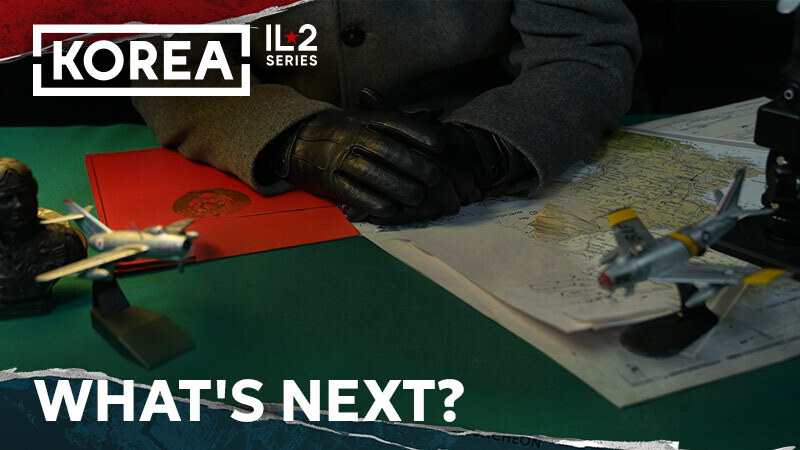
Post-Release Development Strategy
1C Game Studios has published Dev Blog #85 for IL-2 Series Korea, detailing the immediate priorities for the title’s post-release lifecycle. The announcement clarifies that the development team is shifting focus from foundational implementation to iterative refinement, specifically targeting the Pilot AI system. This update serves as a traditional roadmap following a major release, aiming to address player feedback and outline the structural changes planned for the near future.
The blog post emphasizes that this stage of development is defined by the interaction between community feedback and developer response. Similar to a previous Dev Blog published at the start of Early Access, the current update reviews the most actively discussed topics since the game’s launch. The developers note that they successfully implemented most of the tasks outlined in that earlier document, establishing a baseline of completed objectives before moving to the current phase of polishing and expansion.
The Complexity of AI Refinement
The primary technical focus of the next development cycle is the Pilot AI. The studio has confirmed an iterative approach to AI development, acknowledging that the initial release required the completion of several fundamental tasks. These pre-release objectives were designed to ensure the AI could perform core combat tasks reliably. This reliability had to account for specific environmental and mechanical factors unique to the Korean theater, including changed dynamics of aerial combat, new weapon types, and the predominantly mountainous terrain.
Beyond combat performance, the initial development phase required the implementation of new systems for ground operations and command structures. The team needed to integrate a new system for interacting with airfields, ensuring that taxiing became a natural part of missions. Additionally, a new command system was developed for players acting as commanders. According to the verified source material, all of these foundational tasks have been completed.
With the groundwork laid, the next stage is AI polishing. This involves improving behavior and addressing the specific shortcomings players have already encountered. The developers highlight the inherent complexity of combat flight simulators, describing them as systems with a vast number of possible situations. It is impossible to predetermine every set of conditions in which the AI might find itself and be required to make decisions.
Interdependencies and Variables
The challenge of AI refinement stems from the sheer volume of variables at play. Altitude, speed, aircraft positions, terrain, armament, objectives, threats, and the current task create a virtually infinite number of combinations. Consequently, the AI system for combat aircraft is an extremely complex mechanism with a large number of interdependencies.
The developers note that this complexity is especially pronounced during transitions between different tasks. Because the AI must navigate these interdependencies in real-time, the iterative polishing process is necessary to smooth out behaviors that may not have been evident during the initial implementation of core tasks. The goal is to enhance the realism and reliability of AI actions across the diverse scenarios presented by the game’s environment.
Upcoming Content and Updates
In addition to the AI roadmap, the announcement provides a brief overview of upcoming content. The developers stated that they will very soon share news about bombers for the Great Battles mode. This content addition is part of the broader plan to expand the game’s offerings following the main release.
Furthermore, the studio indicated that they will provide details about the first update for IL-2 Series Korea. While specific technical specifications for this update were not detailed in this blog post, the announcement confirms that an update is in the pipeline and will be communicated in the near future. This update is expected to align with the broader goals of addressing player feedback and implementing the planned changes discussed in the dev blog.
Context and Limitations
This Dev Blog represents a standard communication practice for the studio following major releases. By outlining future plans, the developers aim to manage expectations and provide transparency regarding the development trajectory. The focus on AI polishing reflects the reality of simulation development, where initial releases often prioritize functional completeness over nuanced behavioral refinement.
The announcement does not provide specific dates for the AI updates or the first Korea update, nor does it detail the specific technical changes that will be made to the AI code. The emphasis is on the methodology—iterative development—and the acknowledgment of the system’s complexity. Players should expect that improvements will be rolled out over time as the team addresses the identified shortcomings.
The verified source material confirms that the foundational tasks, including airfield interaction and command systems, are complete. Future efforts will concentrate on the quality of AI decision-making in complex, variable-rich environments. The upcoming news regarding bombers for Great Battles and the first Korea update will likely provide more concrete details on content expansion and technical adjustments.
For simulation users, this announcement signals a transition from feature implementation to quality assurance and refinement. The iterative approach to AI development suggests that changes will be incremental, addressing specific issues as they are identified and tested. The complexity of the AI system means that these improvements will require careful balancing to maintain realism while enhancing performance.
Real Sim is produced with editorial automation and institutional bylines. How this is made →
More Flight & Aviation →