PMDG Brings the 777F to PS5 With Platform Launch Caveats
The Boeing 777F is now available for PlayStation 5 in Microsoft Flight Simulator, but PMDG says direct Navigraph connectivity is not yet available on the new platform.
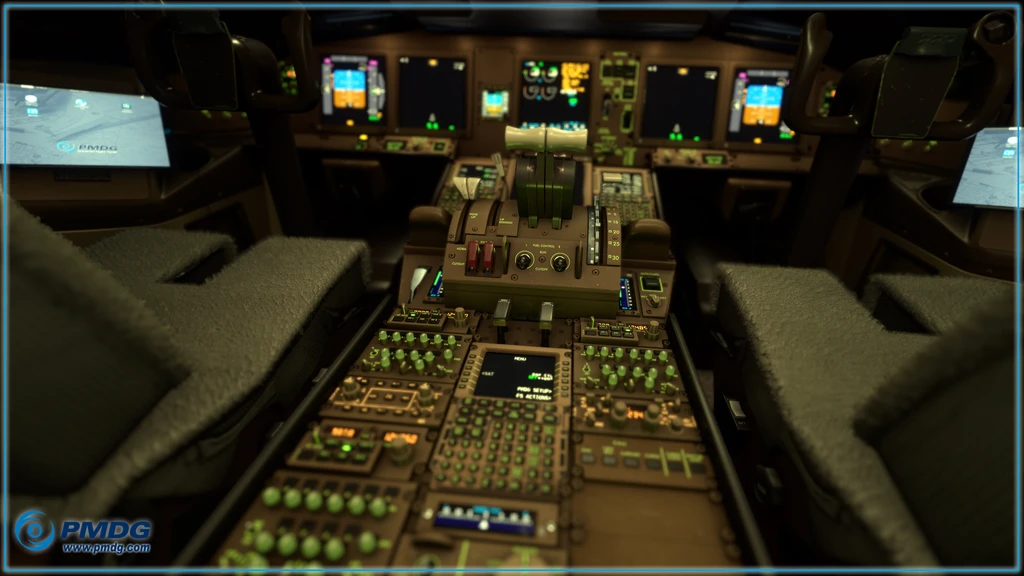
PMDG announced on July 28, 2026 that its 777F freighter had arrived on the PlayStation 5 Marketplace for Microsoft Flight Simulator. The release gives console pilots access to one of PMDG’s most detailed long-haul aircraft, but the company’s announcement also makes clear that a console launch is shaped by platform services as much as by the aircraft’s own systems.
The 777F is built around the Boeing freighter rather than a passenger cabin. PMDG’s product description highlights a detailed flight deck, configurable equipment and a model created with lidar scanning and photogrammetry. Those are manufacturer descriptions, not evidence of an independent test, but they explain why the add-on is a meaningful arrival for console users who have largely encountered simpler default aircraft.
PMDG says its goal is to give PlayStation users the same functionality, quality and support offered on Windows, Xbox and cloud platforms wherever the platform permits. That qualification is important. A simulator add-on can carry its aircraft code to another platform, but the surrounding services—navigation databases, external tools, authentication and marketplace delivery—may not be available in exactly the same way.
The clearest example is Navigraph. PMDG says direct Navigraph connectivity is not yet available in the PlayStation 5 version. That does not make the aircraft unusable, but it changes how a pilot who relies on current navigation data prepares a flight. The limitation is also a useful reminder that “the same aircraft on another platform” is not the same thing as identical infrastructure around the aircraft.
PMDG reports that its initial testing was encouraging, with the 777F running smoothly and comparing well visually with the Xbox version. That is the developer’s assessment of its own release rather than a Real Sim hands-on result. PMDG is asking users to report platform-specific problems through the 777 forum, where new combinations of console settings, hardware and usage can be investigated.
For the audience, the significance is access and expectation. The 777F is a cargo aircraft that rewards planning, systems familiarity and long flights, so a PlayStation release broadens the audience for a style of simulation previously associated more strongly with PC add-ons. At the same time, pilots should distinguish the aircraft’s published feature set from the services that remain platform-dependent.
The PS5 launch is therefore both a product release and a test of how far a detailed commercial flight add-on can travel across a closed console environment. PMDG has opened that route with the 777F, while openly identifying one of the important pieces that still has to catch up.
The aircraft’s cargo role gives the release a different rhythm from a short console flight game. A freighter session is built around a departure plan, a route, changing fuel and weight assumptions, and the discipline of managing a long flight without treating the systems as decoration. That kind of use is possible on a console only if the add-on remains legible from the controller, supports the platform’s performance budget and gives the pilot a way to prepare without relying on PC-only tools.
This is why the Navigraph note deserves to sit beside the availability announcement rather than in a footnote. Current navigation data is part of the workflow for many serious virtual airline users. Without direct connectivity, the pilot has to understand what data the simulator provides and what preparation can be done through the platform itself. The aircraft can still be flown, but the surrounding routine is different, and buyers should make that distinction before assuming a console copy is a one-for-one replacement for their desktop setup.
There is a broader platform lesson here as well. Add-on aircraft used to be one of the clearest reasons to choose a PC flight simulator. A PS5 release does not erase the differences between ecosystems, but it makes the choice less binary by bringing a complex aircraft to a console marketplace. The result will be judged by more than visual quality: update cadence, controller ergonomics, storage, marketplace delivery and support for external services all shape whether a detailed aircraft feels at home on the platform.
Real Sim is produced with editorial automation and institutional bylines. How this is made →
More Flight & Aviation →