Meta Rebuilds XR Simulator Around Synthetic Rooms and Closed-Loop Quest Testing
The July 22 developer update puts synthetic environments, session replay and virtual controller input at the centre of a broader Meta Quest development workflow.
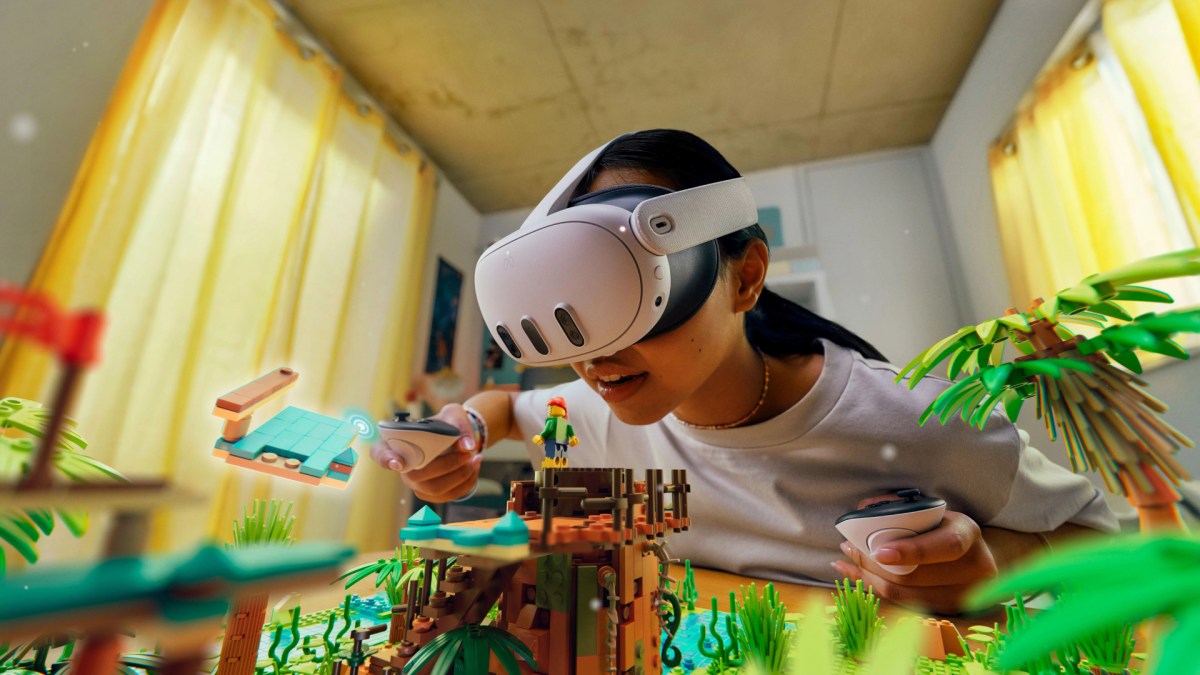
Meta’s July 22 recap of Unite Seoul 2026 describes a redesigned Meta XR Simulator aimed at making Quest development less dependent on repeatedly putting on a headset. The tool can test mixed-reality experiences in synthetic rooms, simulate hands and controllers, exercise Scene API and passthrough features, capture and replay sessions, support multiplayer testing and accept input from a real headset without requiring the developer to wear it.
That list is relevant beyond game development. Any VR simulator with physical controls, cockpit geometry or spatial interfaces has to be tested across more than one ideal room. A synthetic environment gives a team a way to vary walls, furniture and available space before asking people to carry a build through a lab or a home. It does not reproduce every optical or ergonomic variable, but it can catch a class of assumptions earlier.
The simulator is becoming a test harness
Meta’s description frames XR Simulator as a place to validate interactions, not just a visual preview. Session capture and replay can make a failure reproducible. Virtual controllers and hands can exercise the same interaction path repeatedly. Multiplayer testing can expose state problems that are difficult to arrange when every participant needs a separate physical headset.
The proposed workflow matters because VR bugs are often tied to context: a control is behind a virtual wall, passthrough behaves differently in a room with a different layout, or an input sequence breaks after a player loses tracking. Synthetic rooms and replay do not remove the need for real-device testing. They create a cheaper loop for discovering which problems are worth taking to the headset.
AI enters the development loop carefully
The same update introduces Meta XR Operator as an upcoming capability in Meta XR SDK v205. Meta says the operator will give an AI agent scene understanding and virtual controller input inside XR Simulator. The described actions include reading room geometry, inspecting a Unity scene, taking screenshots, pressing buttons, moving thumbsticks, pulling triggers and navigating menus.
That is a meaningful change in the boundary between code generation and verification. An agent that can interact with a simulated scene can test a multi-step flow instead of stopping after a successful build. It can also fail in a new way: a simulated pass is evidence about the scenarios it exercised, not proof that a real person will understand the interface or that every device behaves identically.
Meta says SDK v205 is coming soon, so this article treats the operator as announced future tooling rather than a generally available release. The redesigned XR Simulator features described in the July 22 post are the present focus; the AI layer is the next step Meta is proposing for that test loop.
The distinction between those two stages is useful for teams planning a build. A simulator that can create rooms, replay sessions and accept controller input can improve the ordinary test cycle now. An agent that can reason about the scene would change who performs parts of that cycle later. The second idea depends on the first one being predictable enough that an automated interaction is meaningful.
There are practical limits to an AI-driven test harness. A controller press can prove that a button responds, but it cannot decide whether the button is discoverable to a new user or whether a physical control is safe to reach while moving. Synthetic furniture can reveal a collision, but it cannot stand in for every headset, lighting condition or room boundary. Those are reasons to widen testing, not reasons to treat automation as a replacement for human review.
For simulation developers, the useful shift is practical. Faster room variation, replay and controller automation can make spatial software easier to maintain. The result still needs a physical headset, representative users and a real safety review where the application affects training or equipment. No hands-on assessment of the tooling is implied.
Real Sim is produced with editorial automation and institutional bylines. How this is made →
More The Hardware Deck →