Redbird’s G1000 NXi and E001 Plan Push Flight-Training Hardware Toward Specific Fleets
Redbird’s next flight-deck update is scheduled for August 17, with a G1000 NXi emulation followed by an interchangeable E001 panel designed around higher-fidelity aircraft configurations.
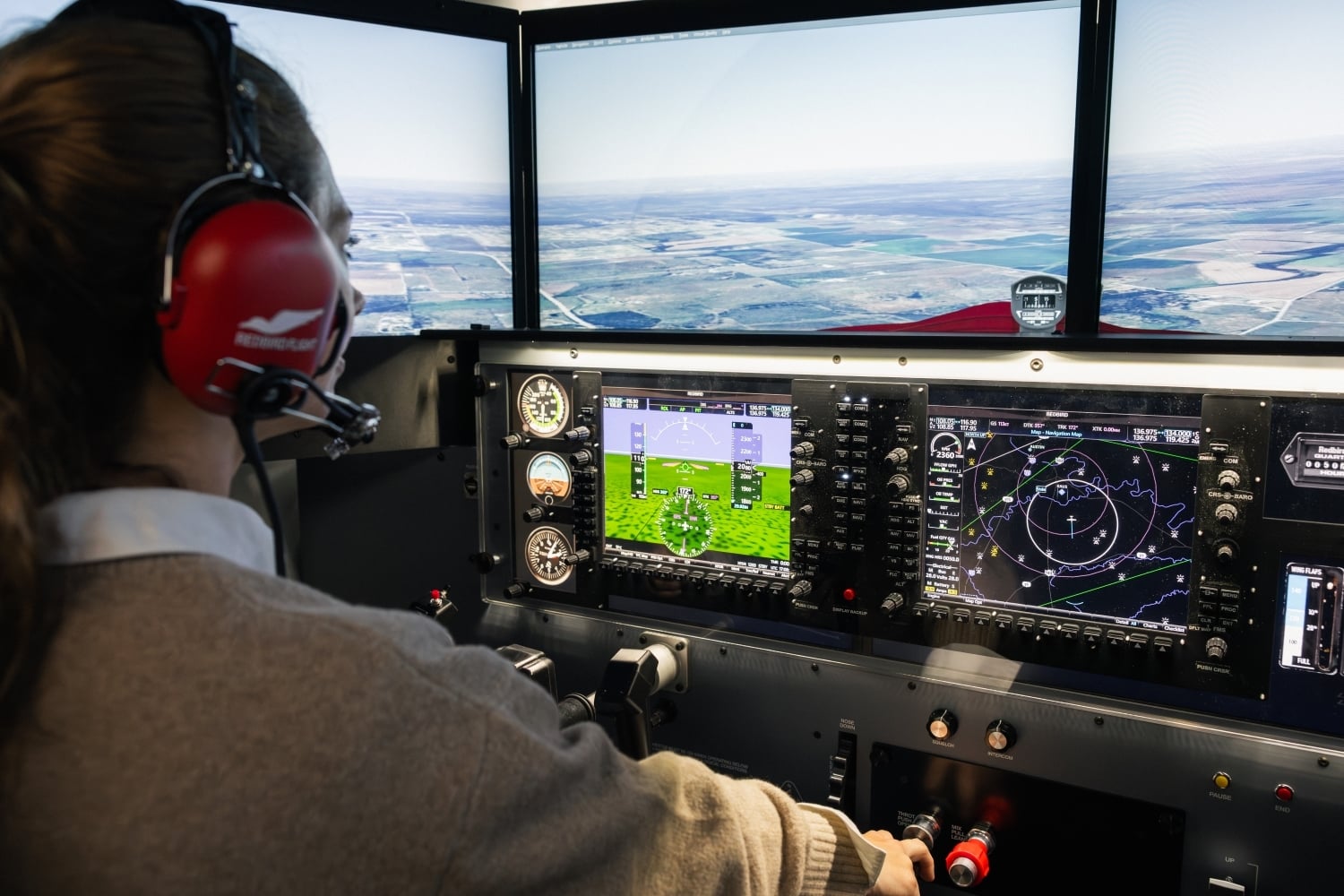
Redbird Flight is preparing a two-part change to the way its aviation training devices represent aircraft cockpits. The first part is a high-fidelity G1000 NXi software emulation scheduled for release on August 17, 2026. The second is the E001 Enhanced Aircraft panel, a new interchangeable hardware configuration planned for early 2027.
The software is intended for technically advanced aircraft and integrated flight-deck training. Redbird lists improved graphics and faster processing, along with Synthetic Vision Technology, HSI mapping on the primary flight display and SafeTaxi airport-environment tools. Those are not just visual additions. They are the kinds of avionics functions that determine whether a trainee is practising a procedure in a recognisable cockpit context or working through a generic instrument layout.
The E001 panel makes the same argument in physical form. Redbird says it will include hardware for two Garmin GDU 1054B displays, a GMA 1347 audio panel and controls for three analogue standby instruments. Embedded video displays are part of the design, and the panel can query the rest of the training device to determine which aircraft configurations it can represent accurately. That is a more specific goal than simply adding a larger screen to a simulator.
Redbird is presenting the upgrades as part of a broader move toward fleet-specific training. Flight schools often operate more than one aircraft type, and a device that can be reconfigured is useful only if its software, panel, controls and instructor tools agree about what is being simulated. The company’s roadmap includes further Garmin and Avidyne configurations, including the GTN and IFD families, rather than treating the G1000 NXi as a one-off product.
Backward compatibility is therefore one of the most important claims in the announcement. Redbird says the Enhanced Aircraft line is modular and compatible with its existing installation base, including devices reaching back to the original FMX 1. That could let operators update individual software and hardware components instead of replacing an entire training device. The announcement does not specify the price of the E001 panel or the installation requirements for every older configuration, so the cost of that upgrade path remains an open question.
The timing also shows why professional simulation hardware should be judged differently from a consumer peripheral. The NXi software has a scheduled release date, while the E001 is still a planned product with a prototype on display. A flight school will care about avionics fidelity, instructor workflow, maintenance, certification and the aircraft fleet it can represent, not only the sharpness of a display. A new panel can be impressive and still be a poor fit if it does not match the school’s aircraft or approval requirements.
Redbird’s direction is nevertheless clear. Instead of selling one fixed cockpit identity, it is trying to make the training device a configurable platform that can follow the fleet. If the modular hardware, software emulation and instructor controls mature together, the result could give schools a more credible way to rehearse procedures across several aircraft without scattering that work across unrelated devices. That is a more consequential upgrade than a graphics refresh, even though the first visible step is a new avionics display.
The proposal also puts the instructor at the centre of the system. A display is valuable when it helps a trainee interpret an aircraft state, but a training device earns its place in a school through the exercises that surround it. Scenario control, repeatable failures and a clear record of what the trainee saw make an avionics lesson easier to debrief. Redbird’s modular approach will be strongest if those instructional tools evolve alongside the cockpit hardware instead of arriving as separate upgrades.
Operators will still need to work through the practical questions before treating the roadmap as an installation plan. A new panel must fit the room, the existing control hardware and the school’s approved training programme. The timing of the software release is firm in the announcement; the E001 remains a future hardware product. Keeping those stages separate helps buyers assess what can be scheduled now and what still depends on delivery, integration and local approval.
Real Sim is produced with editorial automation and institutional bylines. How this is made →
More The Hardware Deck →