Korail Starts AI Track-Work Simulator Project for Safer Repeated Rail Training
The Korean railway operator says an 18-month project will combine VR, a digital twin and an AI physics engine to rehearse track hazards without entering the track.
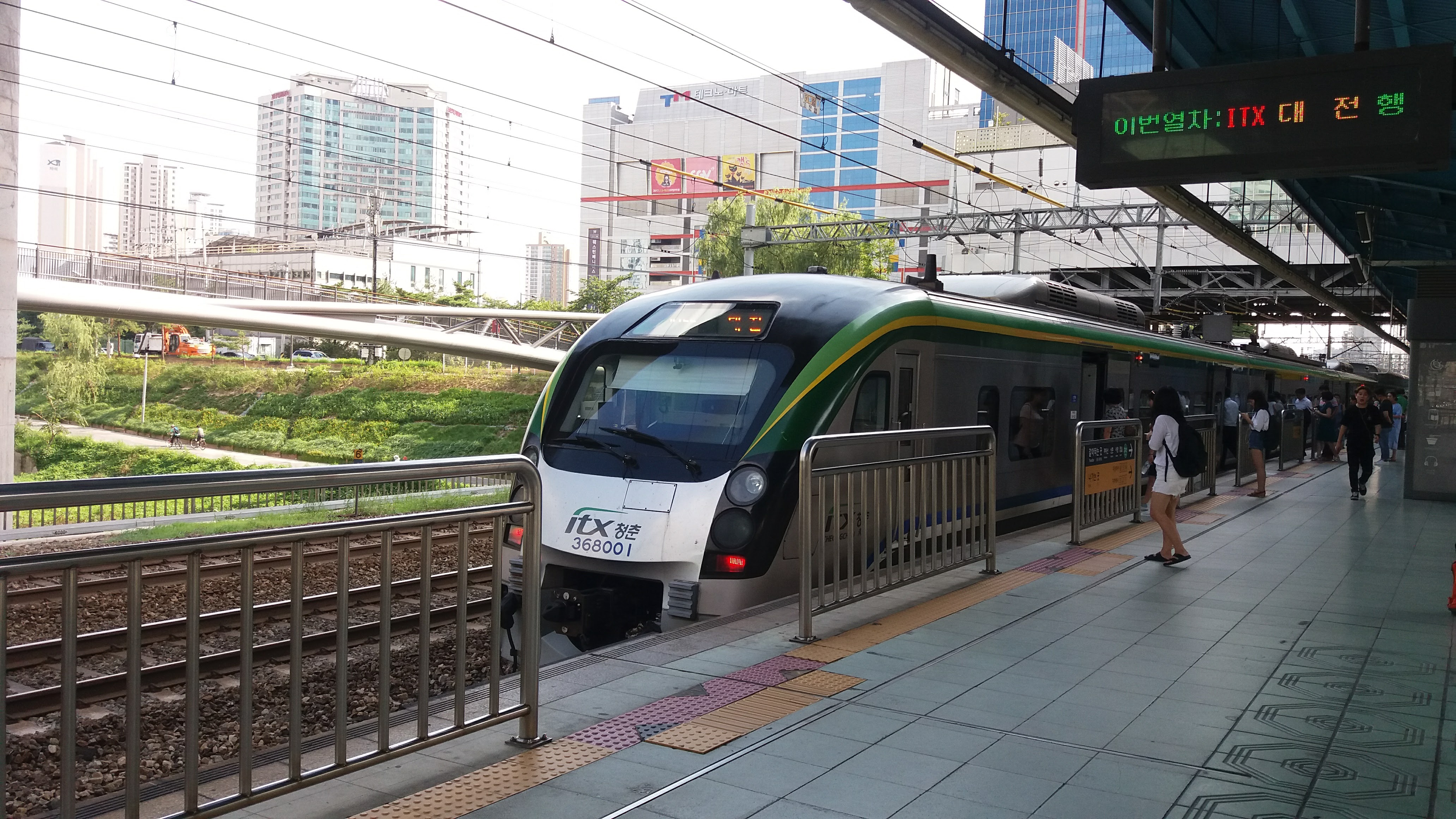
Korea Railroad Corporation, or Korail, said on July 23 that it had started development of an AI-based track-work training simulator. The project is designed to let workers rehearse procedures without entering a live track environment. Korail says the target is commercialization in 2027, so the announcement describes a development programme rather than a finished training product.
The project has a stated budget of KRW 4.07 billion, including KRW 2.85 billion in government support, and is scheduled to run for 18 months from July 2026 to December 2027. Korail is working with Hannam University and YMX. Those details make the announcement more than a generic AI demonstration: it has a defined period, named participants and a public-sector application with a measurable delivery horizon.
Turning a worksite into a repeatable lesson
Korail says the simulator will combine AI, virtual reality and a digital twin to reproduce track, infrastructure and surrounding terrain. The stated purpose is to take learners through the full work procedure, from preparation to completion, while removing the hazards of the physical worksite.
That structure is important for railway training. A lesson about a tool or rule is not enough if workers must also recognise where they are, what traffic is moving nearby and when a safe boundary has changed. A digital twin can put the task in a recognisable environment, while VR allows the trainee to repeat the sequence rather than waiting for a rare live scenario.
The official release specifically identifies train-generated wind pressure and the risk area around overhead-line electric shock as hazards the AI physics engine is intended to visualise. Those are not interchangeable warnings. One concerns the force and timing associated with a moving train; the other concerns a dangerous electrical boundary. A useful simulator has to teach the worker to interpret each risk in the context of a job, not merely display a red zone.
A virtual instructor with a limited brief
Korail also says an AI agent will act as a virtual instructor. It is intended to analyse worker actions, detect unsafe behaviour in real time and suggest the correct work method through an interactive coaching system. That could make practice more responsive, especially when an instructor needs to oversee many repetitions.
It should not be confused with an autonomous safety authority. The source describes a planned coaching function, not a validation that the AI can certify a worker or replace qualified supervision. The project also plans to extend the audience beyond new employees to people working for partner companies, which raises the importance of consistent assessment rules and clear escalation when the system is uncertain.
That distinction is especially important when a simulator is built around safety-critical work. A virtual instructor can point out that a sequence is unsafe, but an organisation still has to decide how the warning maps to its rulebook, how the trainee is assessed and when a human instructor takes over. The official project description supports the coaching ambition; it does not publish an acceptance standard for the finished system.
The staged rollout also suggests that the digital twin will need operational validation, not only visual accuracy. Track geometry, work zones and hazard timings have to correspond to the jobs people actually perform. If those models are kept current, repeated practice can be an advantage. If they are treated as a static scene, the sense of realism can hide a training gap rather than close one.
Korail says the simulator will be tested and then expanded step by step across railway worksites. Until that development and demonstration work is complete, the defensible conclusion is narrower: the operator has committed to a funded, multi-party rail-training project that uses VR and digital-twin methods to make dangerous procedures repeatable. No installed system or training outcome is claimed here.
Real Sim is produced with editorial automation and institutional bylines. How this is made →
More Other Machines →