CAE and Leonardo Expand the M-346 Integrated Training System
The companies’ July 22 agreement extends their work across live, virtual and constructive training, with Block 20 features and future operational concepts in scope.
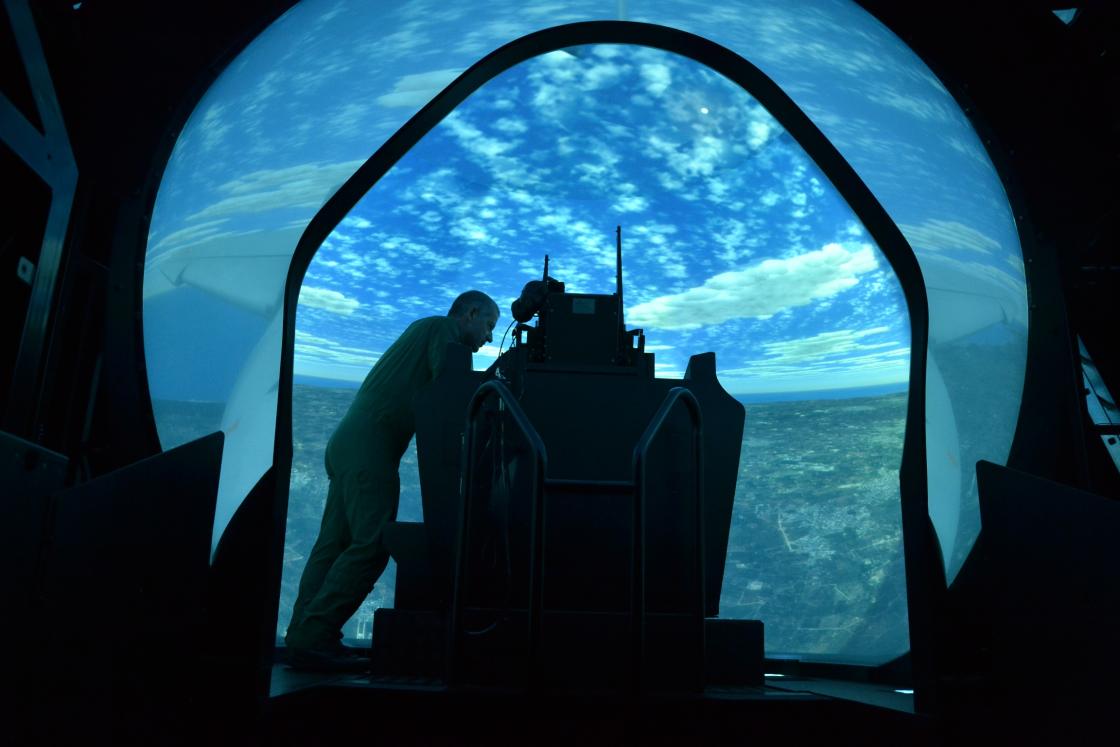
CAE and Leonardo announced a collaboration agreement on July 22 that expands their long-running work around the M-346 Integrated Training System. The companies say the agreement will address advanced fighter-pilot training opportunities and develop capabilities for changing operational concepts, including live, virtual and constructive environments.
The scope reaches beyond a single simulator model. Leonardo’s announcement names a technology roadmap for the M-346 system, including Block 20 features, Live Synthetic Integration and the connection of live and simulated training environments. Those terms describe an effort to make aircraft, ground-based devices and computer-generated participants contribute to the same training picture. The release does not announce a contract value, delivery date or new aircraft order.
A training system built around more than flight time
The International Flight Training School at Decimomannu in Sardinia is the practical reference point for the partnership. Leonardo describes the school as an Italian Air Force advanced-training operation powered by Leonardo with CAE collaboration. The school combines M-346 aircraft, ground-based training, mission rehearsal and instructor-led teaching.
CAE’s description of the site lists 22 M-346 advanced jet trainers, two full-mission simulators and three part-task trainers. It also describes a Ground Based Training System and a 360-degree visual system for fast-jet training. Those figures belong to the existing IFTS description; they should not be read as new equipment announced by the July agreement.
That distinction matters because integrated training programmes are often described as if a new software capability instantly changes the whole school. In practice, the value depends on how the live aircraft, simulator models, instructor tools and training records agree about the same mission. A network can connect devices without proving that the exercise is valid or that a student has met a qualification standard.
Why LVC is the important phrase
Live, virtual and constructive training links real aircraft, crewed simulators and computer-generated forces or environments. For a military pilot, the benefit is the ability to rehearse a more complex mission without putting every participant or aircraft into the air. It can also make a specific decision point repeatable for multiple students.
The companies’ release frames the expanded collaboration around future operational concepts and increasingly autonomous mission environments. That is a development direction, not a published syllabus. No new certification or acceptance standard is included in the announcement, and no claim is made that the updated system replaces live flying.
The agreement is therefore best understood as an industrial and training roadmap. Leonardo brings the M-346 platform and its integrated system; CAE contributes training-system and simulation expertise. The test for the partnership will be whether future changes improve the link between aircraft behaviour, ground-based rehearsal and instructor assessment without making the training picture harder to validate.
Real Sim is produced with editorial automation and institutional bylines. How this is made →
More Beyond the Game →